
EVs vs Petrol Cars 2025 comparison with real Indian market data. Explore running costs, performance, range, maintenance and best choice for buyers this year. Electric vehicles are evolving quickly in 2025, bringing lower running costs and better features, while petrol cars continue to deliver proven reliability and convenience.
This detailed comparison between EVs vs Petrol Cars 2025 explores performance, pricing, charging access, long-term value and which option is now smarter for Indian buyers seeking practicality, savings and future-readiness.
A Fresh Look at the Battle Shaping Indian Roads
Indian buyers are no longer choosing between cars. They are choosing between two different futures. Some prefer the familiar comfort of petrol engines. Others are shifting to electric power for savings and technology. 2025 is the year when both options compete closely, and small details now influence big decisions.
EVs vs Petrol Cars 2025: Real-World Comparison
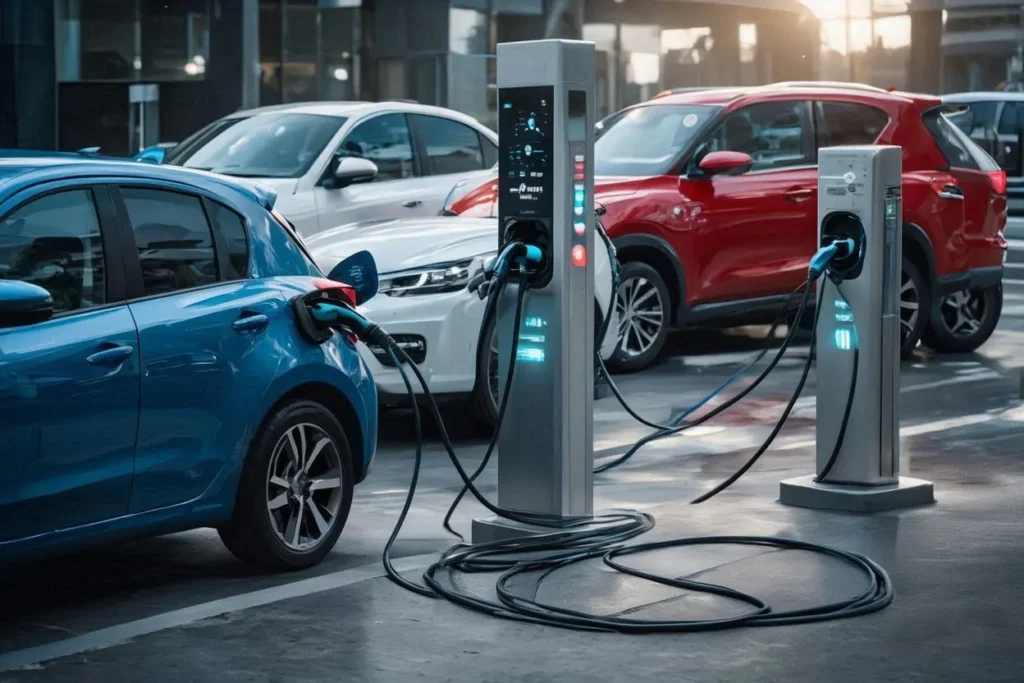
The Indian market has crossovers, hatchbacks and SUVs available in both EV and petrol versions. Below is a real-data comparison based on popular models in each category.
Comparison Table (Real Data from Popular Indian Models)
| Category | EV Example (Real Data) | Petrol Example (Real Data) | Key Difference |
|---|---|---|---|
| Running Cost | ₹1–1.2 per km (Tata Punch EV) | ₹7–9 per km (Maruti Fronx 1.2) | EVs 80% cheaper per km |
| Range / Mileage | 300–421 km certified (MG ZS EV) | 16–20 kmpl (Hyryder / Creta) | Petrol easier for long trips |
| Maintenance | ₹2,000–₹4,000 yearly | ₹8,000–₹12,000 yearly | EVs require fewer moving parts |
| Purchase Price | ₹8.5L–₹24L | ₹6L–₹23L | Petrol has cheaper entry point |
| Refuel / Charge Time | 45 min fast-charge | 3 min petrol fill | Petrol wins for convenience |
Find More: 2025’s Best Sporty Performance SUVs Under 25 Lakh: Which One Delivers the True Thrill?
Performance EVs vs Petrol Cars 2025: Which Feels Better on the Road?
EVs deliver instant acceleration, smooth driving and silent cabin feel. City driving becomes enjoyable because there is no gear shifting or engine vibration. Petrol cars still feel natural for highway users, offering steady performance and predictable behaviour at higher speeds.
Verdict EVs vs Petrol Cars 2025:
EVs win inside the city. Petrol wins for long continuous drives.
Cost of Ownership: The Real Deciding Factor
Petrol prices have stayed high through 2024 and 2025, making daily running expensive. EVs cost almost nothing to commute with and receive government incentives in many states.
Over 5 years, EV owners can save anywhere between ₹1 lakh to ₹2 lakh depending on daily usage.
Charging vs Fueling: Which Suits Your Lifestyle?
If users have home parking, an EV is the easiest to manage. If someone lives in apartments without charging, petrol still offers full convenience. India now has over 12,000+ public CCS chargers, but long routes still require planning.

Which Should You Buy in 2025?
Choose an EV if you drive mostly in the city, want low running costs, and prefer modern features.
Choose a Petrol car if you travel frequently on highways, want faster refueling, or need lower starting prices.
Conclusion
In comparison between EVs vs Petrol Cars 2025, Both technologies are improving quickly, but 2025 marks a turning point for everyday buyers. EVs now deliver major savings and modern features, while petrol cars remain strong for convenience and long-distance comfort. The best choice depends on lifestyle, usage pattern and ownership priorities.
Read More: 2025’s Best Sporty Performance SUVs Under 25 Lakh: Which One Delivers the True Thrill?