
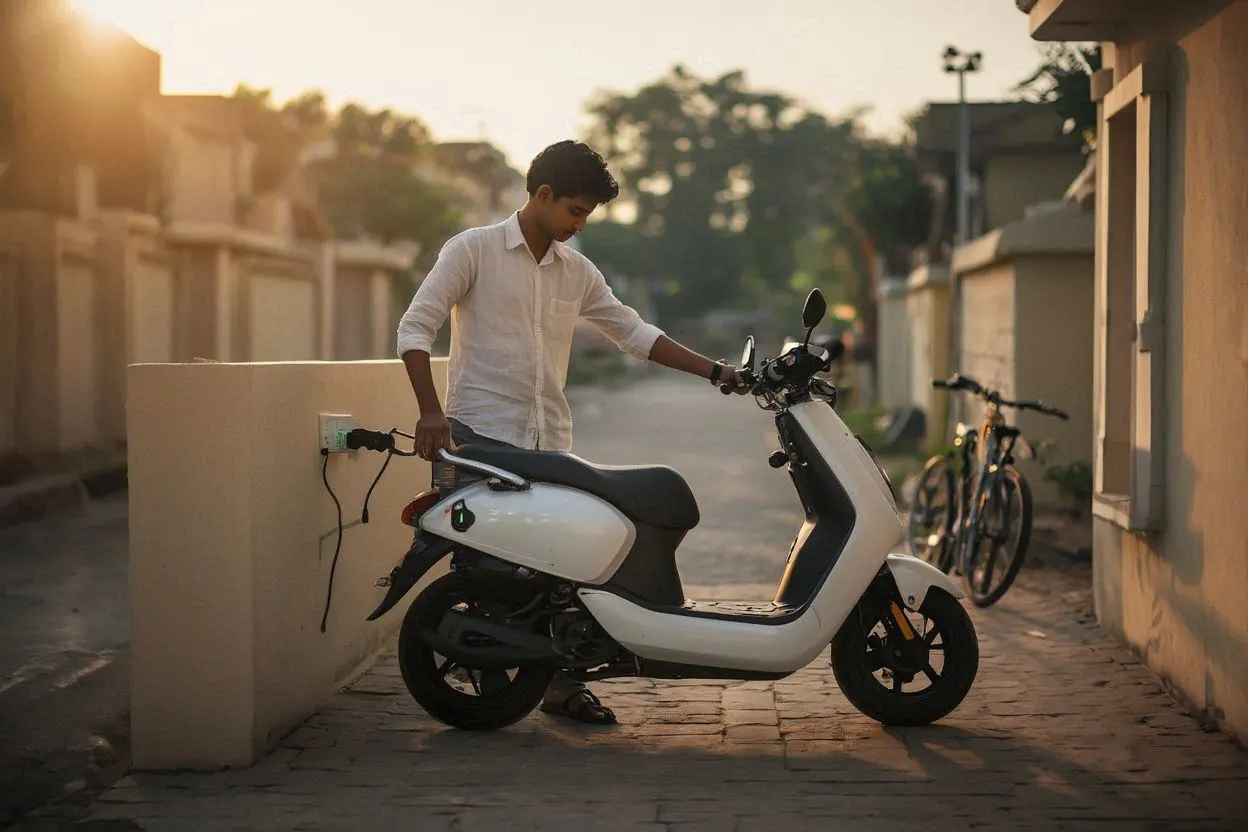
Compare India’s top 2025 electric scooters—Bajaj Chetak, TVS iQube, Suzuki e-Access, Ather 450 & Ola S1 Pro—for real range, features and value to help you buy smart.
Switching to electric means one question keeps coming up: “Can it go far enough before I panic about the next charger?” In cities and suburbs today, range-anxiety still holds sway. The Top 2025 Electric Scooters and newest scooters deliver impressive claimed numbers—but we’re digging into real-world usability, features and ownership value. Let’s see which models stand out.
What Does the Data Tell You?
Electric scooters in India have entered a turning point in 2025. With higher ranges and smarter tech, riders still face “does the claimed range match reality?” This article compares top models’ of top 2025 electric scooters range, usability and daily cost to reveal which one actually delivers—and which remains over-promised.
1. Range vs Real Use- Top 2025 Electric Scooters
A scooter claiming 150-km may realistically give 110-130 km under mixed traffic, hot weather and with accessories. For daily commuting with occasional run-outs this is more than enough — but if you plan full-day rides or variable terrain, you’ll prefer the 157-km+ class.
2. Ownership Value
Range is important for selecting Top 2025 Electric Scooter, but so are service network, battery warranty, build quality and resale. A slightly lower-range scooter with better support may beat a “top-spec” model in long-term value.
3. Usage Fit
- Dense city (stop-go traffic) → ~90-100 km range suffices (e-Access class)
- Mixed city + fringe highway → ~120-150 km range ideal (Chetak, iQube)
- Extended runs or single-charge full-day use → 150-km+ (Ather, Ola top spec)
4. Hidden Costs
Charging infrastructure, battery degradation, extreme heat/climate effects all reduce effective range. Always factor ~10-20% buffer from claimed number.
See More: 2025 Best 125 cc Scooters: Which One Saves You the Most Money?
Real-World Value Comparison of Top 2025 Electric Scooters in India
| Model | Claimed Range* | Key Features | Practical Range Factors | Ideal Usage |
|---|---|---|---|---|
| Bajaj Chetak (2025 series) | ~150 km | Metal body, 3.5 kWh battery, Eco & Sport modes | Heavier build → slightly lower real range in stop-go traffic | Urban + short highway run |
| TVS iQube | ~123 km (in some tests) | 78 km/h top speed, good service network | Real-world may drop 10-15% in hot/peak use | City commuter with occasional outer-belt use |
| Suzuki e-Access | ~95 km (AIS certified) | 51.2 V Li-ion, 3.072 kWh battery | Lower range suits dense urban zones only | Inner-city commuting |
| Ather 450 Series (450X/Apex) | ~157 km (premium variant) | Smart screen, regen braking, premium feel | Higher cost; range good but cost of ownership higher | Tech-savvy urban riders |
| Ola S1 Pro (Gen3) | Up to ~320 km (top spec) | Big battery, voice control, sport mode | Real-world likely lower; premium price | Performance-and-range seekers |
*Claimed ranges as given by manufacturers or certification; real-world results will vary.
Which Electric Scooter Actually Delivers the Best Fit?
If your daily ride is city-only and you return home to charge: something like the Suzuki e-Access makes sense.
If you need flexibility for weekend plus daily use: the Bajaj Chetak or TVS iQube are strong all-rounders.
If you want maximum range and tech—and are willing to pay premium: the Ather 450 Series or Ola S1 Pro deliver but expect higher upfront cost and premium upkeep.
Conclusion to pick top 2025 electric scooters
In the 2025 Indian electric scooter market, the smartest choice isn’t always the longest-range model—it’s the one that aligns with your actual ride-pattern, cost tolerance and infrastructure access. Use the table above to match your usage, then pick a model whose real-world range and value deliver in everyday life.
Read More: When Retro Meets Rage! New Kawasaki Z900RS 2026 Is Pure Motorcycle Art